
Emerging market currencies and exchange rates represent a dynamic and often volatile landscape, influenced by a complex interplay of global and domestic factors. Understanding these markets requires navigating the intricacies of economic indicators, political stability, and investor sentiment. This exploration delves into the key drivers shaping currency values, investment strategies, and the inherent risks and rewards associated with this asset class.
We will examine case studies illustrating the diverse performance of emerging market currencies, providing valuable insights for investors and economists alike.
From the impact of global commodity prices to the role of central bank interventions, we’ll unravel the forces that contribute to both significant gains and substantial losses within these markets. The analysis will cover various investment approaches, highlighting both the potential for high returns and the need for careful risk management. Ultimately, this examination aims to provide a comprehensive overview of this crucial area of global finance.
Defining Emerging Markets
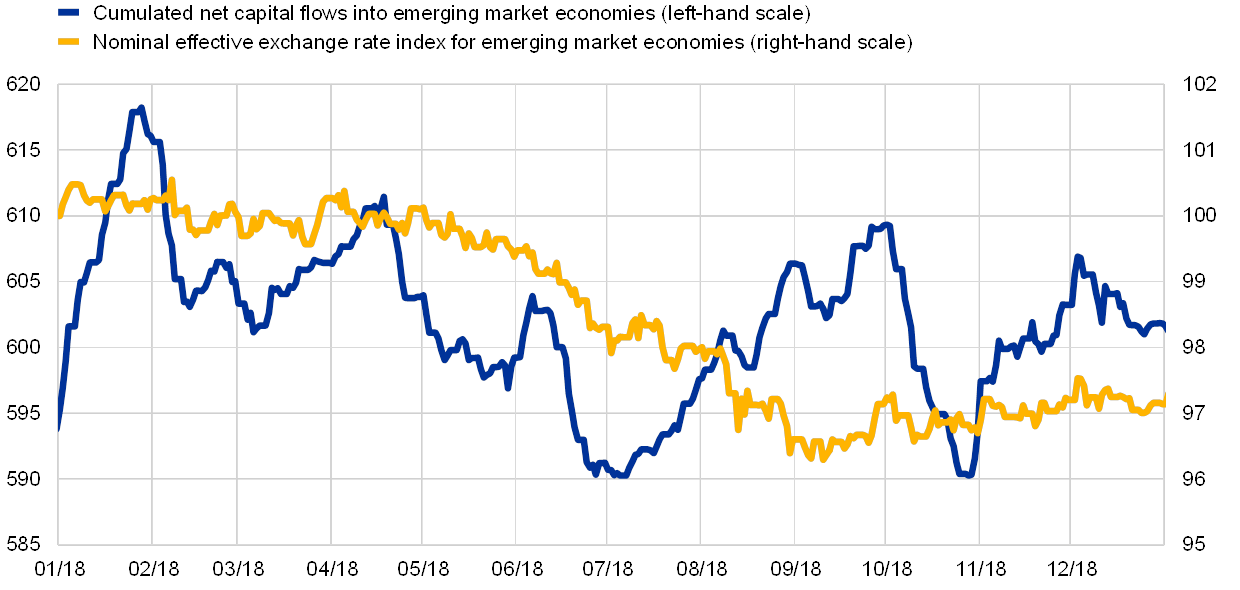
Emerging markets represent a significant portion of the global economy, characterized by rapid growth potential and unique investment opportunities. Understanding their defining characteristics is crucial for investors and policymakers alike. These markets are dynamic and constantly evolving, presenting both exciting prospects and considerable risks.
Emerging market economies are typically characterized by a combination of factors, including rapid economic growth, industrialization, and increasing integration into the global economy. However, they also often face challenges such as volatile macroeconomic conditions, underdeveloped infrastructure, and institutional weaknesses. These characteristics create a complex and often unpredictable investment landscape.
Characteristics of Emerging Market Economies
Several key features distinguish emerging markets from developed economies. These include a relatively low per capita income compared to developed nations, a rapidly growing middle class, and a significant proportion of the population employed in the agricultural sector. Furthermore, emerging markets often exhibit higher levels of income inequality and a less diversified economy compared to their developed counterparts.
Political and economic instability can also be more prevalent. The regulatory environment might be less transparent or consistently enforced than in developed markets, adding to the risk profile.
Classification Criteria Used by MSCI and FTSE
Organizations like MSCI and FTSE employ various criteria to classify emerging markets. These criteria are regularly reviewed and adjusted to reflect changes in the global economy. Key factors considered include: market size and liquidity (the ease with which assets can be bought and sold), economic development indicators (GDP per capita, industrialization levels), and the quality of local institutions and governance.
MSCI, for instance, uses a detailed methodology that includes assessing the investability of local securities and the openness of the local capital market. FTSE uses a similar, albeit slightly different, methodology focusing on the market capitalization, liquidity, and overall accessibility of the market. These indices are widely used by investors as benchmarks for emerging market investments.
Comparison of Emerging and Developed Markets
Developed markets generally exhibit higher levels of per capita income, greater economic diversification, stronger institutions, and more developed infrastructure compared to emerging markets. Developed markets typically have more stable macroeconomic environments, lower inflation rates, and more predictable regulatory frameworks. However, growth rates in developed markets are usually lower than in emerging markets, offering potentially lower returns for investors, although with significantly lower risk.
Emerging markets offer higher potential returns, but also come with substantially greater risk due to factors such as political instability, currency fluctuations, and economic volatility.
Key Economic Indicators Across Selected Emerging Markets
The following table compares four key economic indicators across a selection of emerging markets. Note that data can vary depending on the source and the year. These figures represent snapshots in time and should not be considered definitive predictions of future performance.
| Country | GDP Growth (2022, %) | Inflation (2022, %) | Foreign Direct Investment (2022, USD Billion) |
|---|---|---|---|
| Brazil | 2.9 | 5.79 | 80 |
| India | 7.2 | 6.77 | 84.8 |
| Mexico | 3.1 | 7.46 | 35 |
| China | 3.0 | 2.0 | 250 |
Factors Influencing Emerging Market Currencies
Emerging market currencies are inherently volatile, subject to a complex interplay of domestic and global factors. Understanding these influences is crucial for investors and policymakers alike, as fluctuations can significantly impact economic growth, trade balances, and overall financial stability. This section delves into the key drivers shaping exchange rates in these dynamic markets.
Global Commodity Price Impact on Exchange Rates
Emerging markets often heavily rely on commodity exports. Consequently, global commodity price fluctuations directly affect their currency values. When prices rise for a nation’s primary exports (e.g., oil, minerals, agricultural products), increased export revenue leads to higher demand for the domestic currency, causing appreciation. Conversely, a decline in commodity prices reduces export earnings, weakening the currency. For example, a sharp drop in oil prices can severely impact oil-exporting nations like Nigeria or Venezuela, leading to currency depreciation and economic hardship.
The relationship isn’t always linear; factors like supply elasticity and global demand also play significant roles.
Interest Rate Differentials and Currency Values
Interest rate differentials between emerging markets and developed economies are a major determinant of currency values. Higher interest rates in an emerging market attract foreign investment seeking higher returns. This increased demand for the currency leads to appreciation. Conversely, lower interest rates relative to other countries can trigger capital outflows, resulting in depreciation. The effectiveness of this mechanism depends on factors such as investor confidence, perceived risk, and capital controls imposed by the government.
For instance, a country raising interest rates to combat inflation might see its currency strengthen, attracting investors seeking safe havens.
Political Stability and Risk’s Influence on Currency Fluctuations
Political stability and risk are paramount in influencing emerging market exchange rates. Political uncertainty, such as elections, social unrest, or changes in government policies, can create volatility and deter foreign investment. Increased political risk often leads to capital flight and currency depreciation as investors seek safer alternatives. Conversely, a stable political environment fosters investor confidence, attracting capital and supporting currency appreciation.
Examples include the impact of political transitions or coup attempts on currency values in certain African or South American nations.
Government Policies’ Effect on Exchange Rates
Government policies, both fiscal and monetary, significantly impact exchange rates. Expansionary fiscal policies (increased government spending or tax cuts) can lead to higher inflation and potentially weaken the currency if not managed carefully. Conversely, contractionary fiscal policies can stabilize the economy and support the currency. Monetary policy, through interest rate adjustments and interventions in the foreign exchange market, plays a crucial role in managing exchange rates.
For example, a central bank might intervene to buy its own currency to prevent excessive depreciation, or it might raise interest rates to curb inflation and attract foreign investment. China’s management of its currency through controlled interventions is a well-known example.
Risks Associated with Investing in Emerging Market Currencies
Investing in emerging market currencies carries inherent risks. It’s crucial to understand these before engaging in such investments.
- Currency Volatility: Significant fluctuations are common due to the factors discussed above.
- Political Risk: Political instability can lead to sudden and unpredictable currency movements.
- Economic Risk: Economic downturns or crises can severely impact currency values.
- Liquidity Risk: Trading volume may be lower than in developed markets, making it difficult to buy or sell quickly.
- Inflation Risk: High inflation can erode the purchasing power of the currency.
- Regulatory Risk: Changes in government regulations can impact investment returns.
- Country Risk: The overall risk associated with investing in a particular country, including political, economic, and social factors.
Exchange Rate Volatility in Emerging Markets
Emerging market currencies are known for their significantly higher volatility compared to their developed market counterparts. This heightened fluctuation stems from a complex interplay of economic, political, and financial factors, making them both attractive and risky investment opportunities. Understanding these drivers is crucial for navigating the complexities of these markets.
Factors Contributing to Volatility
Several key factors contribute to the increased volatility observed in emerging market currencies. These include macroeconomic instability, often manifested in high inflation rates, large current account deficits, and fluctuating government debt levels. Political risk, encompassing factors such as regime changes, social unrest, and corruption, also plays a significant role. Furthermore, the relatively underdeveloped financial markets in many emerging economies often lead to thinner liquidity and greater susceptibility to speculative attacks.
Finally, the dependence on commodity exports can leave these currencies vulnerable to global commodity price swings. A sudden drop in commodity prices, for instance, can trigger a sharp devaluation.
Volatility Comparison of Major Emerging Market Currencies (2019-2023)
The following table provides a simplified comparison of the volatility of several major emerging market currencies over the past five years. Note that volatility is represented here by the annualized standard deviation of the currency’s exchange rate against the US dollar. Precise figures would require accessing and processing specialized financial databases. This table offers a general illustrative representation and shouldn’t be used for precise financial decision-making.
| Currency | Annualized Standard Deviation (Approximate) | Factors Contributing to Volatility | Period |
|---|---|---|---|
| Brazilian Real (BRL) | 10-15% | Commodity price fluctuations, political uncertainty | 2019-2023 |
| Mexican Peso (MXN) | 7-12% | US-Mexico trade relations, global economic conditions | 2019-2023 |
| South African Rand (ZAR) | 12-18% | Commodity prices, domestic political risks | 2019-2023 |
| Turkish Lira (TRY) | 20-30% | High inflation, political instability | 2019-2023 |
Central Bank Mechanisms for Exchange Rate Management
Emerging market central banks employ various mechanisms to manage exchange rate fluctuations. These include interventions in the foreign exchange market, adjusting interest rates to influence capital flows, and managing reserves. For example, a central bank might sell its foreign currency reserves to increase the domestic currency’s value during periods of rapid depreciation. Similarly, raising interest rates can attract foreign capital, thereby strengthening the currency.
However, these interventions are not without limitations, and their effectiveness depends on various factors, including the size of the central bank’s reserves and the credibility of its monetary policy.
Impact of Capital Flows on Exchange Rate Volatility
Capital flows, both inflows and outflows, significantly influence exchange rate volatility in emerging markets. Large inflows of foreign capital, often driven by investment opportunities or speculative trading, can lead to currency appreciation, potentially creating an overvalued currency and making exports less competitive. Conversely, sudden capital outflows, often triggered by global economic shocks or changes in investor sentiment, can result in sharp currency depreciations.
This highlights the vulnerability of emerging markets to external shocks and the importance of sound macroeconomic policies to mitigate these risks. The 1997-98 Asian Financial Crisis serves as a stark example of how sudden capital flight can destabilize currencies and economies.
Investing in emerging market currencies presents a unique blend of opportunity and challenge. While the potential for high returns is undeniable, understanding the inherent volatility and managing associated risks are paramount. This exploration has highlighted the multifaceted nature of these markets, emphasizing the importance of considering economic indicators, political landscapes, and global events when formulating investment strategies. By carefully analyzing these factors and employing appropriate risk management techniques, investors can navigate the complexities of this dynamic sector and potentially reap significant rewards.
FAQ Section
What are the main benefits of investing in emerging market currencies?
Potential for high returns due to faster economic growth in some emerging markets and the possibility of diversification beyond traditional developed market assets.
What are some common risks associated with investing in emerging market currencies?
High volatility, political instability, currency devaluation, and susceptibility to global economic shocks.
How can investors mitigate the risks of investing in emerging market currencies?
Through diversification, hedging strategies, thorough due diligence, and a long-term investment horizon.
How do central banks in emerging markets influence their currency’s value?
Through monetary policy tools such as interest rate adjustments, foreign exchange interventions, and capital controls.
What are some examples of emerging market currencies that have performed well recently?
Performance varies greatly depending on the specific market and time period. Research into individual currency performance is crucial before making investment decisions.


